Quick answer
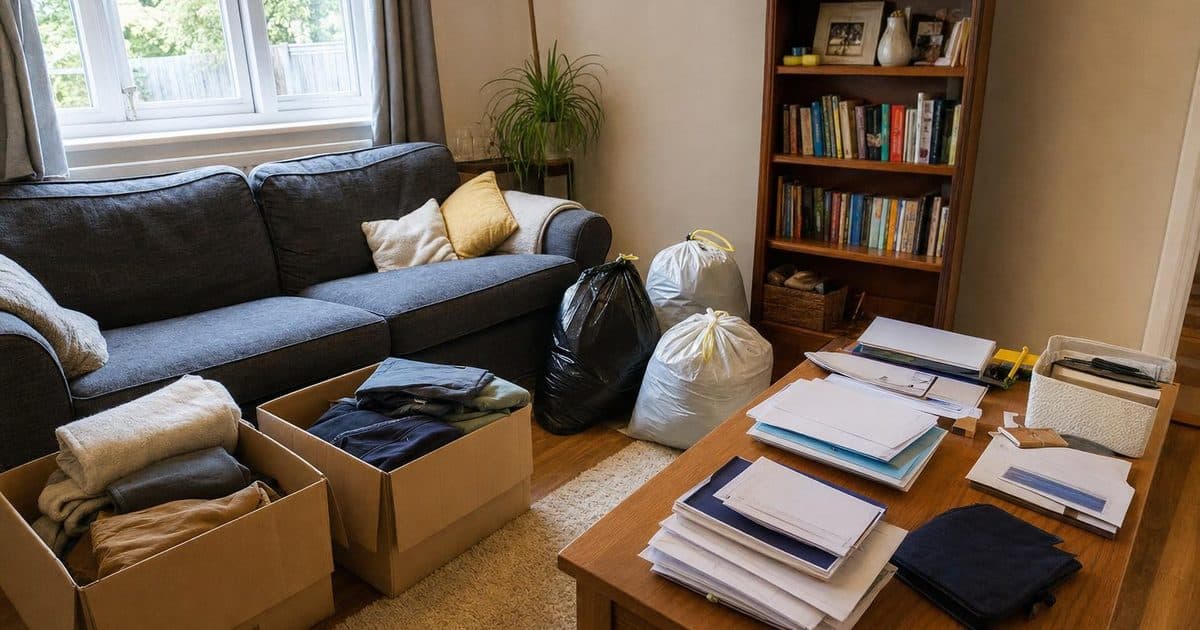
Before booking, remove personal documents, valuables, medication and anything you want to keep. Group larger items by room and flag anything that needs careful handling, such as white goods or electronics.
Why sorting first makes the clearance easier
A little preparation before a house clearance can save time on the day and make the quote more accurate. If the team can see what is being removed, what is staying and what needs special handling, the job is usually easier to plan.
This is especially helpful in Andover when you are clearing a property after a move, a bereavement or a tenancy ending. Sorting in advance also reduces the chance of important items being put aside with general contents by mistake.
If you are arranging a wider property clearance, it can help to think about whether any outbuildings, loft spaces or storage areas need separate attention. Services such as Garage Clearance or Shed Clearance may be useful if those spaces are full as well.
What to remove before the team arrives
Start with anything personal, sensitive or hard to replace. These items are easiest to overlook when a room is full, so it is best to take them out first and keep them somewhere safe.
Personal items and paperwork
Go through drawers, cabinets, bedside tables, bookshelves and cupboards for items that should not be cleared with the rest of the contents.
- Passports, driving licences and bank cards
- Utility bills, letters and financial records
- Photographs, diaries and keepsakes
- Keys, address books and small personal items
- Wills, legal papers and important documents
Valuables and items to keep
Set aside anything you plan to reuse, sell or pass on. This may include jewellery, watches, small antiques, ornaments, tools or furniture that family members want to keep.
If several people are involved, label these items clearly and move them to one room or corner so there is no confusion when the clearance starts.
How to group items for a smoother visit
Once the personal items are removed, group the remaining contents in a way that helps the clearance team work efficiently. Simple separation by room is often enough.
For example, you might leave bedroom furniture together, keep kitchen items in one area and place garden or shed contents near the exit if they are being removed. This gives a clearer picture of the work and helps the team load items in a sensible order.
If you have larger pieces that need moving from an upper floor, mention them in advance. Furniture, wardrobes and white goods can take more planning than bags of general waste, especially where stairways or tight hallways are involved. If you need help moving bulky items out separately, Furniture Removal may also be relevant.
| Item type | What to do before the clearance |
|---|---|
| Documents | Remove and store securely |
| Valuables | Separate and label clearly |
| Furniture | Group by room if possible |
| Electronics | Flag for careful handling |
Items that need extra care
Some items should be pointed out before the visit so they can be handled properly. This helps avoid damage and makes the clearance more straightforward.
White goods and electrical items
Fridges, freezers, washing machines, tumble dryers, ovens and televisions can be awkward to move and may need special consideration. Let the team know about these in advance, especially if they are in a tight kitchen, utility room or garage.
For electrical equipment that is no longer wanted, E Waste Disposal may be the right option. For larger appliances such as fridges and cookers, White Goods Disposal is often more suitable.
Breakables, medication and sensitive materials
Pack away glassware, ceramics and anything fragile before the clearance begins. If there is medication in the property, move it to a safe place straight away so it does not get mixed in with general items.
If you find paint, chemicals, gas bottles or other unusual materials, set them aside and mention them when you book. This gives the team a better idea of what is in the property and helps them plan the job safely.
A simple room-by-room checklist
A quick walk through each room can help you avoid missing something. You do not need to empty the property yourself, but a basic cheque can make a big difference.
- Start with bedrooms and remove paperwork, jewellery and personal clothing.
- Check living rooms for ornaments, remotes, photos and small valuables.
- Go through kitchens for medicines, food, documents and items you want to keep.
- Look in lofts, cupboards, airing cupboards and under stairs for hidden items.
- Review garages, sheds and outbuildings for tools, bikes and stored belongings.
If the property includes a cluttered garden or outside storage, separate those areas early so they do not get overlooked. In some cases, a Garden Clearance or Shed Clearance can be arranged alongside the main house clearance.